



Hyundai Tune-Up
What's Included in a Hyundai Tune-up in Phoenix
A modern Hyundai tune-up in Phoenix addresses the key systems affecting your engine's performance. These services are essential for the life of your vehicle. Unlike the tune-ups of decades past—when mechanics manually adjusted carburetors and distributor points—modern Hyundai tune-ups focus on inspecting and replacing key engine performance components. Regular tune-ups keep your Hyundai running smoothly and prevent costly repairs down the road.
Here's what you can expect:
Spark Plug Inspection and Replacement
Spark plugs are the heart of your engine's ignition system. Modern Hyundais use long-lasting iridium or platinum spark plugs designed to last between 60,000 and 100,000 miles. Over time, the electrodes wear down, making it harder to create the spark needed for combustion. Worn spark plugs lead to misfires, rough idling, poor fuel economy, and difficulty starting.
During a tune-up, technicians inspect your spark plugs for wear and carbon buildup. If they're showing signs of deterioration, replacement is recommended—this single service can dramatically improve your engine's performance.
Air Filter Replacements
Every time you drive, your engine filter absorbs microparticles from the air. When clean, it prevents dirt and debris from entering your engine's combustion chamber —especially important in dusty Arizona conditions. When clogged, the filter can actually work against the engine by restricting airflow that’s necessary for the fuel-air mixture. This strain burns more fuel, reducing gas mileage. Since this blockage stresses the engine, a dirty engine filter contributes to a shorter road life.
The cabin air filter keeps the air inside your vehicle clean. While it doesn't affect performance, a dirty cabin filter reduces air conditioning efficiency. Both filters are inexpensive to replace and make a noticeable difference.
Fuel System Service
During a tune-up, technicians inspect or replace the fuel filter, which traps contaminants before they reach your engine. A clogged fuel filter forces your fuel pump to work harder and can eventually cause pump failure—a much more expensive repair.
Depending on your vehicle's condition, fuel injector cleaning may also be recommended. Clean injectors spray a fine mist of fuel for efficient burning, while dirty injectors cause rough running and decreased fuel economy.
Ignition System Components
Beyond spark plugs, ignition coils generate the high voltage needed to create sparks. When they fail, your engine misfires or won't start at all. During a tune-up, technicians test each coil to ensure it's functioning properly. Older Hyundai models may also have spark plug wires that can crack or corrode over time. A healthy ignition system ensures reliable starting and smooth operation, whether you are driving a 2020 Hyundai Tucson or a 2015 Hyundai Santa Fe.
Belt and Hose Inspection
The serpentine belt drives critical accessories like your alternator, power steering pump, and air conditioning compressor. Technicians inspect this belt for cracks, fraying, or glazing. The timing belt (on equipped models) is even more critical—if it breaks, it can cause catastrophic engine damage. Timing belts typically need replacement at 60,000 to 100,000 miles. Coolant hoses and vacuum hoses are also checked for leaks or deterioration.
Fluid Checks and Services
From the feisty Elantra to the 3-row Palisade family hauler, your Hyundai depends on various fluids to operate safely. During a tune-up, technicians check and top off engine oil, coolant, brake fluid, power steering fluid, and transmission fluid. Depending on your mileage and maintenance schedule, some fluids may need complete replacement. Fresh fluids protect your engine from wear, prevent overheating, and maintain proper hydraulic pressure in your braking and steering systems.
Battery Testing and Computer Diagnostics
Arizona's extreme heat is particularly hard on batteries. During a tune-up, technicians perform a load test to measure your battery's cranking power and clean corroded terminals. Modern Hyundais also have sophisticated onboard diagnostic systems. Technicians use professional-grade scan tools to read trouble codes, check sensor data, and verify that all systems are operating within normal parameters—often uncovering issues before they become noticeable.
Additional Services
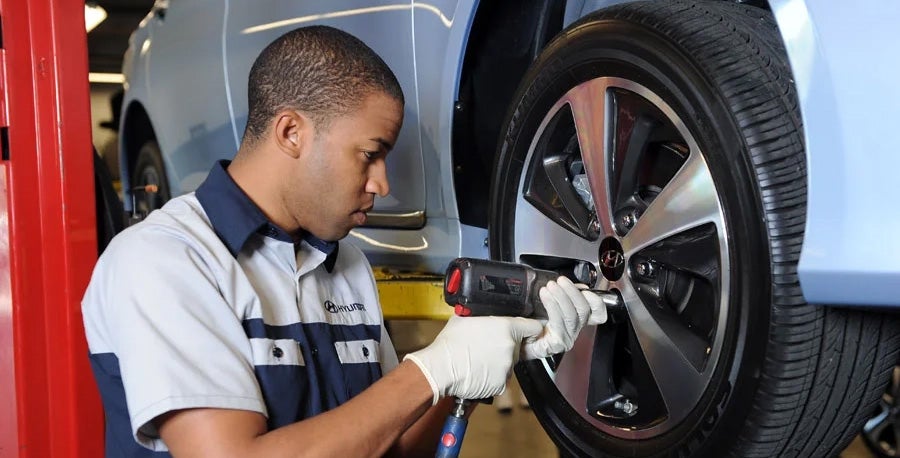
A comprehensive tune-up often includes tire rotation, brake inspection, throttle body cleaning (to remove carbon deposits), and PCV valve inspection. These additional checks ensure your entire vehicle is operating safely and efficiently. For your convenience, the service department at Earnhardt Hyundai of North Scottsdale is open 7 a.m. to 6 p.m. weekdays and 7 a.m. to 4 p.m. Saturdays. Get directions.
How Much Does a Hyundai Tune-up Cost?
Understanding tune-up costs helps you budget for this important maintenance. These car repair prices are for comparison purposes only. Actual prices vary based on what services your Hyundai needs, its style, its age, and its current condition.
Basic Tune-up: $50-$150 includes filter checks, fluid checks and a visual inspection. This is appropriate for newer vehicles with lower mileage that just need routine maintenance.
Standard Tune-up: $200-$500 is the most common range and covers what most vehicles need at their 30,000-mile service interval. This includes spark plugs, filters, fluid checks, belt and hose inspection, battery testing, and full computer diagnostics.
Comprehensive Tune-up: $400-$800+ is for older vehicles or those with higher mileage. This includes everything in a standard tune-up plus timing belt replacement (typically needed at 60,000-100,000 miles), ignition coil replacement if needed, and multiple fluid replacements.
Certain factors influence the final price: vehicle age and mileage, your model type (a 4-cylinder Elantra needs four spark plugs while a V6 Santa Fe needs six), genuine Hyundai OEM parts versus aftermarket options, and the extent of service needed based on your vehicle's condition.
The good news? Regular tune-ups are always less expensive than the major repairs your vehicle will face if you skip maintenance. Plus if your Hyundai is less than three years old, chances are that it qualifies for complementary maintenance.
8 Warning Signs Your Hyundai Needs a Tune-up
Don't wait for your scheduled maintenance if your Hyundai is showing these symptoms:
1. Check Engine Light Illuminated. Never ignore this light. While it could indicate various issues, problems requiring a tune-up—like failing spark plugs or faulty oxygen sensors—are common culprits.
2. Decreased Fuel Economy. Are you filling up more frequently despite driving the same routes? There’s something wrong. Poor fuel economy is often the first noticeable sign that tune-up service is needed.
3. Rough Idling or Stalling. Your engine should idle smoothly when stopped. If you feel shaking or vibration, that's rough idling. Stalling is even more serious and needs immediate attention—it's not just inconvenient, it's dangerous.
4. Hard Starting. Does your Hyundai crank several times before the engine fires up? Hard starting indicates that your ignition system isn't creating strong, consistent sparks. While your engine may eventually start, the problem will worsen over time.
5. Loss of Power or Sluggish Acceleration. Your Hyundai should respond immediately when you press the accelerator. If you notice a lack of power when merging onto highways or struggling to climb hills, your engine isn't performing efficiently.
6. Engine Misfiring . A misfire feels like jerking or hesitation during acceleration. Misfires dump unburned fuel into your exhaust system, which can damage your expensive catalytic converter. Act fast because this tune-up issue can quickly become a major repair.
7. Unusual Noises. Knocking or pinging noises during acceleration, rattling sounds, or squealing from under the hood indicate problems. Any noise that's new or different deserves investigation.
8. Excessive Vibrations. If your steering wheel vibrates when idling, if the whole vehicle shakes at stoplights, or if you feel unusual vibrations during acceleration, several tune-up items could be responsible.
If you notice any of these warning signs, don't delay. Schedule a tune-up appointment promptly to prevent expensive repairs or a breakdown.
Schedule Service
-
Factory-Trained Technicians - Hyundai-certified specialists with ongoing training
-
Genuine OEM Parts- Quality parts designed specifically for your model
-
Advanced Diagnostics - State-of-the-art equipment for accurate service
-
Convenient North Scottsdale Location - Easy access with comfortable amenities
-
Competitive Pricing - Fair rates with frequent service specials
-
Arizona Expertise - Our technicians understand how desert conditions affect your vehicle
-
Transparent Service - Our team explains what you need and never recommends unnecessary services
When Does Your Hyundai Need a Tune-up?
The most reliable guide for tune-up timing is your owner's manual, which provides specific maintenance schedules tailored to each model. If you don't have your manual, your service advisor can look up the recommended schedule for your specific vehicle.
General mileage guidelines: Most Hyundais need their first major tune-up around 30,000 miles. At 60,000 miles, a more comprehensive service is recommended, including timing belt assessment on equipped models. The 100,000-mile mark calls for a major tune-up with extensive component replacement.
Special considerations: Phoenix-area drivers face challenging conditions. Arizona’s dusty desert environment and extreme heat accelerate wear on engine components. If you frequently take short trips, tow trailers, or haul heavy loads, your Hyundai benefits from more frequent tune-up service than the standard schedule recommends.
When in doubt, get it checked. Preventive maintenance is always cheaper than repairs. If you're approaching a maintenance interval, noticing any warning signs, or simply unsure whether service is due, schedule an inspection.
Why Choose Earnhardt Hyundai of North Scottsdale
When your Hyundai needs a tune-up, trust the experts who know your vehicle best:
Schedule your Hyundai tune-up online or call us today!
Schedule Service
Frequently Asked Questions
How long does a Hyundai tune-up take?
Most tune-ups take 2-4 hours depending on services needed. Basic tune-ups may be completed in under 2 hours, while comprehensive services take longer.
What's the difference between a tune-up and an oil change?
An oil change replaces engine oil and the oil filter for lubrication. A tune-up is comprehensive, addressing spark plugs, filters, fuel system, ignition components, and overall engine performance. Oil changes are routine upkeep; tune-ups are performance optimization.
Will a tune-up improve my gas mileage?
Yes! A proper tune-up can significantly improve fuel efficiency by ensuring optimal combustion, clean airflow, and efficient fuel delivery. Many drivers notice immediate improvements at the pump, sometimes gaining 2-4 miles per gallon or more.
Can I drive my Hyundai if it needs a tune-up?
It depends on the symptoms. Minor issues like slightly decreased fuel economy are manageable short-term. However, stalling, severe misfiring, or check engine lights require immediate attention for safety and to prevent further damage.
What happens if I skip a tune-up?
Skipping tune-ups leads to decreased performance, worse fuel economy, and potentially expensive damage. Worn spark plugs cause misfires that can damage your catalytic converter—a repair costing $1,000-$2,500. Small, preventable issues become expensive emergency repairs. Regular tune-ups are always cheaper than major repairs.

Keep Your Hyundai Running Strong
Regular tune-ups keep your Hyundai running smoothly, efficiently, and reliably for years to come. Whether you're experiencing warning signs or simply due for scheduled maintenance, Earnhardt Hyundai of North Scottsdale is here to help. Our expert technicians use genuine Hyundai parts and advanced diagnostic equipment to ensure your vehicle performs at its best.
Don't wait for small problems to become big expenses. A tune-up today prevents costly repairs tomorrow. It also keeps your valuable Hyundai warranties in place.
Schedule your Hyundai tune-up today! Call us at 888-505-0099 or visit us at 8445 E. Frank Lloyd Wright Boulevard. Experience the difference expert service makes.
Schedule your Hyundai tune-up online or call us today!
Schedule ServiceEarnhardt Hyundai North Scottsdale
Address
8445 E Frank Lloyd Wright Blvd
Scottsdale, AZ 85260
Phone
- Sales 888-316-9966
- Service 888-505-0099
- Parts 888-413-7711
| Monday | 8:00AM - 9:00PM |
| Tuesday | 8:00AM - 9:00PM |
| Wednesday | 8:00AM - 9:00PM |
| Thursday | 8:00AM - 9:00PM |
| Friday | 8:00AM - 9:00PM |
| Saturday | 8:00AM - 8:00PM |
| Sunday | 10:00AM - 6:00PM |
| Monday | Closed |
| Tuesday | 7:00AM - 6:00PM |
| Wednesday | 7:00AM - 6:00PM |
| Thursday | 7:00AM - 6:00PM |
| Friday | 7:00AM - 6:00PM |
| Saturday | 7:00AM - 4:00PM |
| Sunday | Closed |
| Monday | Closed |
| Tuesday | 7:00AM - 6:00PM |
| Wednesday | 7:00AM - 6:00PM |
| Thursday | 7:00AM - 6:00PM |
| Friday | 7:00AM - 6:00PM |
| Saturday | 7:00AM - 4:00PM |
| Sunday | Closed |